What Is a Dual Fuel System?
Why More Illinois Homeowners Are Combining Heat Pumps & Furnaces (2026 Guide)
If you’ve been researching heat pumps lately, there’s a good chance you’ve also in heard the term:
🔥 “Dual Fuel System”
And for many Illinois homeowners, this may actually be one of the BEST modern HVAC solutions available.
Why?
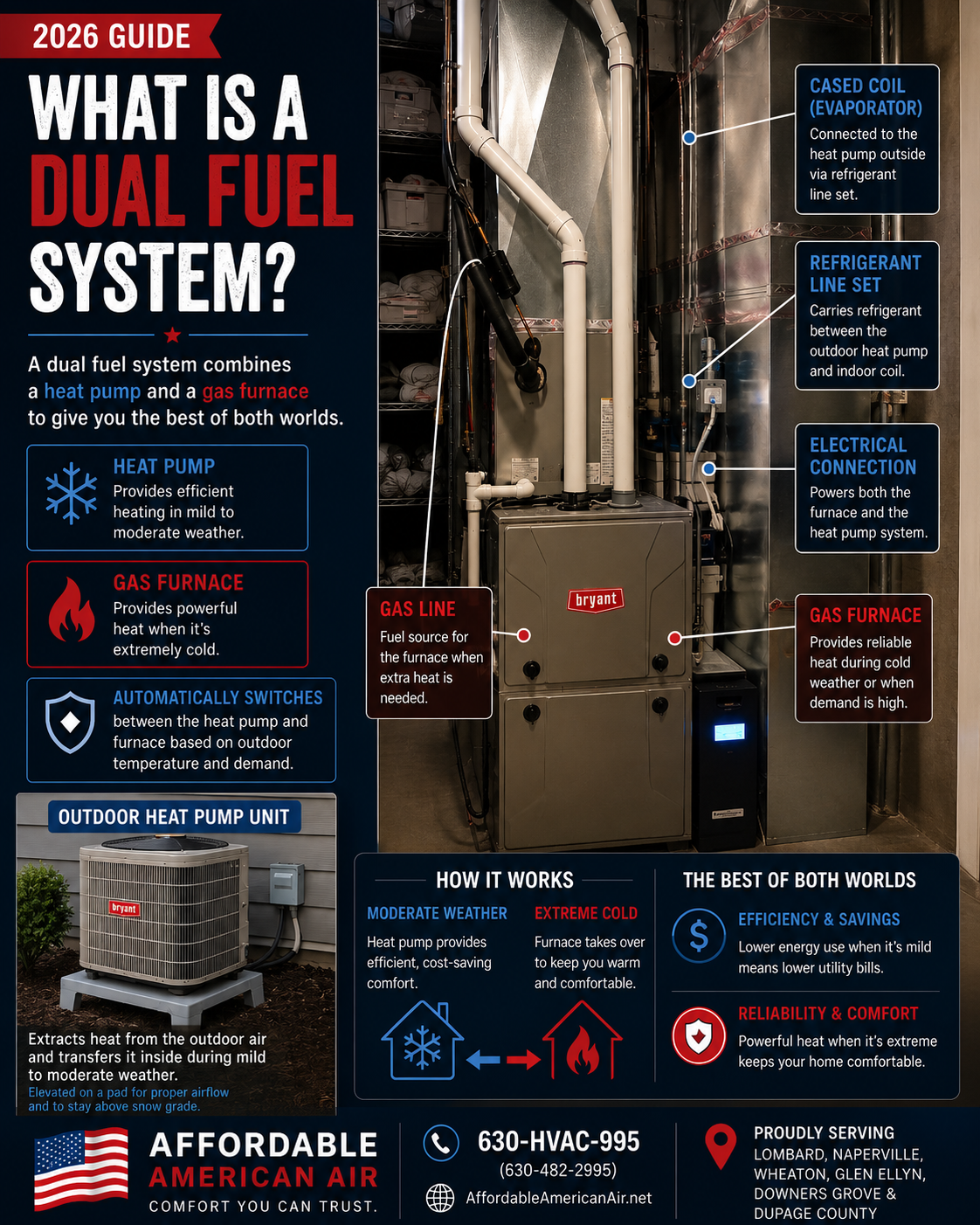
Because a dual fuel system combines:
✅ The efficiency of a heat pump
WITH
✅ The reliability of a gas furnace during extreme cold weather
At Affordable American Air, we’ve seen growing interest in dual fuel systems throughout:
- Naperville
- Lombard
- Wheaton
- Glen Ellyn
- Downers Grove
- Surrounding DuPage County communities
Especially among homeowners replacing:
- Aging furnaces
- Older air conditioners
- Inefficient HVAC systems
So let’s break down exactly what a dual fuel system is—and why it works so well in Illinois.
🔥
What Is a Dual Fuel System?
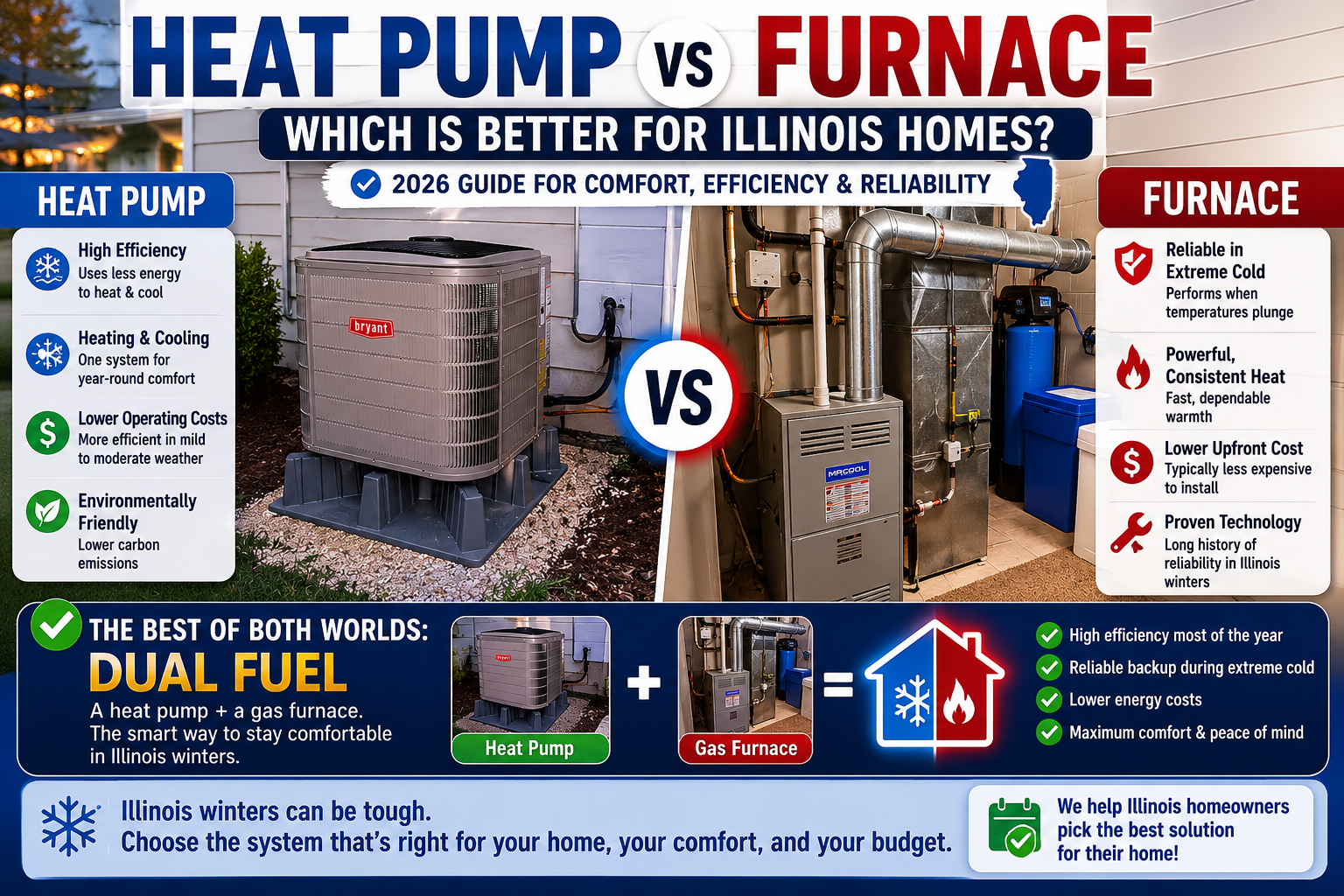
A dual fuel system combines:
❄️ A Heat Pump
AND
🔥 A Gas Furnace
Into one integrated HVAC system.
🧠
The Goal of Dual Fuel
The system automatically uses:
- The MOST efficient heating source for current outdoor conditions
Instead of relying entirely on:
- ONLY a furnace
OR - ONLY a heat pump
👉 The system intelligently switches between them.
⚡
How Does a Dual Fuel System Work?
During mild to moderately cold weather:
👉 The heat pump handles heating duties.
This is where heat pumps are often extremely efficient.
❄️ Why Heat Pumps Work Well During Moderate Weather
Heat pumps use:
❄️ Vapor Compression Refrigeration Technology
Instead of generating heat through combustion:
👉 They transfer heat energy using refrigerant, compressors, coils, and refrigeration pressure changes.
This can allow the system to heat the home very efficiently during moderate outdoor temperatures.
🔥 What Happens During Extreme Cold?
As outdoor temperatures drop:
- Heat pump efficiency gradually decreases
- Heating output drops
- Runtime increases
At a certain outdoor temperature:
👉 The system automatically transitions to furnace heat.
🔥 The Furnace Takes Over During Extreme Weather
When Illinois temperatures become:
- Extremely cold
- Subzero
- Polar vortex conditions
👉 The gas furnace becomes the primary heat source.
This provides:
✅ Strong heating performance
✅ Very warm supply air
✅ Reliable operation during harsh Midwest winters
🧠
The Homeowner Usually Doesn’t Have To Do Anything
Modern dual fuel systems are typically automated.
The thermostat and controls determine:
- Outdoor temperatures
- System efficiency
- Heating demand
And automatically switch between:
- Heat pump operation
- Furnace operation
🌡️
Why Dual Fuel Systems Work So Well in Illinois
Illinois weather is PERFECT for dual fuel applications because:
👉 We experience BOTH:
- Moderate temperatures
- Extreme winter cold
❄️ During Moderate Temperatures
The heat pump can often:
✅ Operate efficiently
✅ Reduce energy usage
✅ Maintain steady comfort
🔥 During Extreme Midwest Winters
The furnace provides:
✅ Powerful heating
✅ Strong recovery during cold snaps
✅ Reliable performance during severe weather
💡
This Is Why Many Illinois Homeowners Like Dual Fuel
Instead of choosing:
- ONLY a furnace
OR - ONLY a heat pump
👉 Dual fuel combines the strengths of BOTH systems.
For many homes:
It truly becomes:
🔥 The best of both worlds
🏠
What Equipment Is Included in a Dual Fuel System?
Many homeowners are surprised to learn that:
👉 Dual fuel systems still look VERY similar to traditional central HVAC systems.
A typical dual fuel system may include:
- Outdoor heat pump condenser
- Indoor evaporator coil
- Gas furnace
- Refrigerant lines
- Thermostat
- Existing ductwork
💡
Does a Dual Fuel System Still Use Ductwork?
Yes—many dual fuel systems still use:
✅ Traditional ductwork
✅ Supply vents
✅ Return vents
✅ Central airflow systems
That’s important because many homeowners incorrectly assume:
❌ “heat pump” automatically means:
- wall-mounted mini splits
- no ductwork
- completely different HVAC systems
But in reality:
👉 Many dual fuel systems feel VERY familiar to homeowners already used to central heating and air conditioning.
❄️
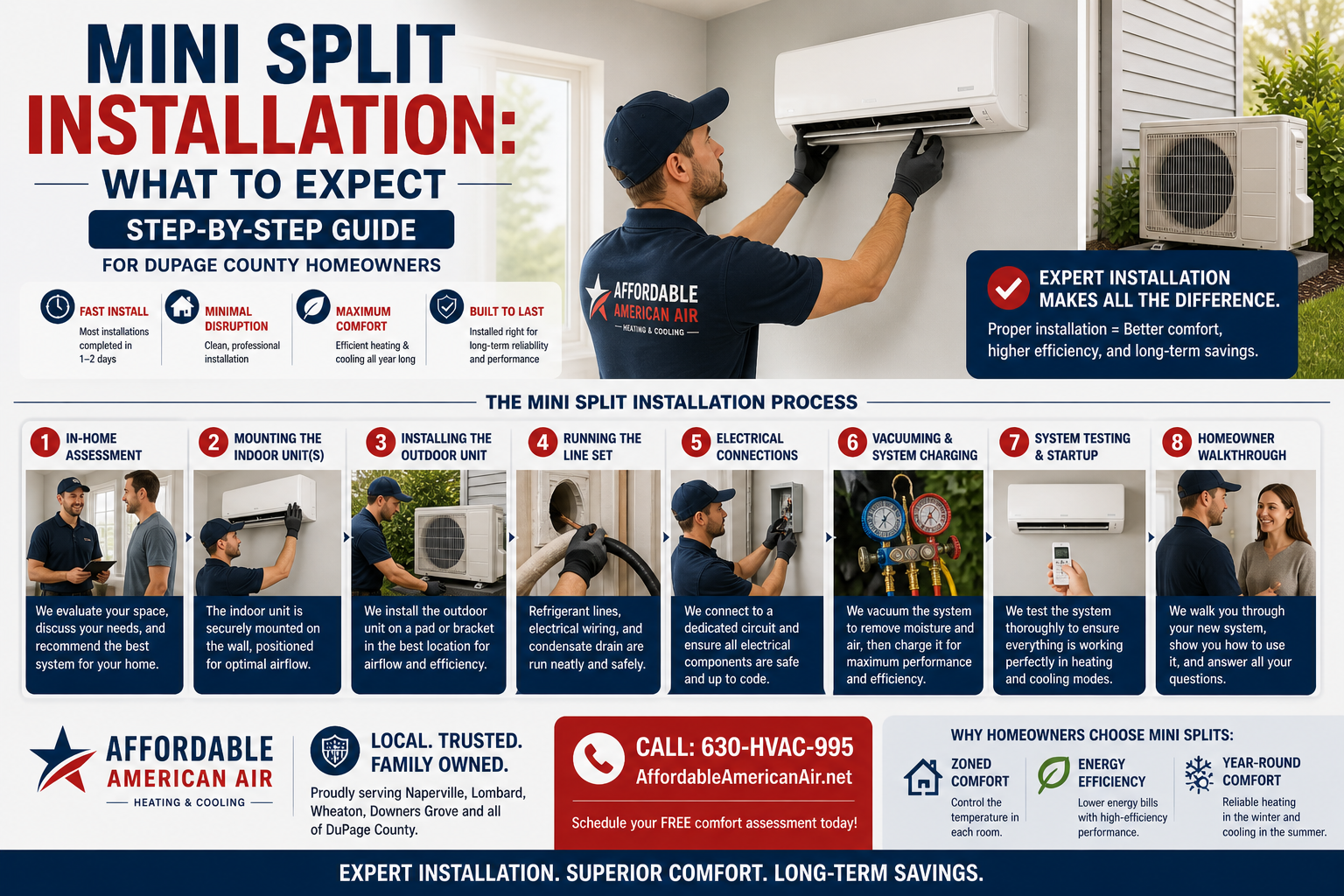
What About Mini Split Heat Pumps?
Many mini split systems ARE also heat pumps.
However:
👉 Dual fuel systems are most commonly associated with:
- Ducted central HVAC systems
- Furnace-integrated applications
Mini split heat pumps are often better suited for:
- Additions
- Basements
- Garages
- Boiler homes
- Hot & cold spot problems
- Homes without ductwork
⚡
When Does the Furnace Turn On?
This depends on:
- Outdoor temperatures
- System configuration
- Equipment sizing
- Thermostat programming
At a certain outdoor “balance point”:
👉 The thermostat determines when furnace operation becomes more beneficial than heat pump operation.
The transition is usually automatic.
🧠
The Balance Point Explained
The “balance point” is the outdoor temperature where:
👉 The heat pump alone can no longer efficiently maintain the home’s heating demand.
At that point:
- Furnace operation may become more effective
- The system transitions automatically
This balance point varies from home to home.
⚡
Benefits of Dual Fuel Systems
✅ Improved Energy Efficiency
Heat pumps can operate very efficiently during moderate weather conditions.
✅ Reliable Illinois Winter Heating
The furnace provides backup during extreme cold.
✅ Familiar Central HVAC Feel
Most systems still use:
- Ductwork
- Thermostats
- Central airflow
✅ Lower Operating Costs During Moderate Weather
Heat pump operation can reduce energy usage during certain outdoor conditions.
✅ Excellent Comfort
Dual fuel systems can provide:
- Consistent temperatures
- Better humidity management
- Reliable heating performance
⚠️
Potential Downsides of Dual Fuel Systems
At Affordable American Air, we believe honest homeowner education matters.
Dual fuel systems can have:
- Higher upfront costs
- More complex installation requirements
- Electrical upgrade considerations
- Additional control and thermostat setup needs
However:
👉 Many homeowners feel the efficiency and comfort benefits outweigh these factors long-term.
🏠
Are Dual Fuel Systems Good for Older Illinois Homes?
In many cases:
✅ Absolutely.
Dual fuel systems can work especially well for:
- Homes already using ductwork
- Homes replacing aging furnaces and AC systems
- Homeowners wanting improved efficiency
- Homes looking to modernize HVAC systems
However:
Every home is different.
Proper:
- System design
- Equipment sizing
- Duct evaluation
- Insulation assessment
Are extremely important.
🔥
Dual Fuel vs Furnace: Which Is Better?
There is no universal answer.
For some homes:
👉 A traditional furnace setup may still make the most sense.
For others:
👉 Dual fuel may provide:
- Better efficiency
- Improved comfort
- Reduced operating costs
- More flexible heating performance
The best solution depends on:
- The home
- Existing equipment
- Utility costs
- Comfort goals
- Budget
- Winter performance expectations
🔗
Want to Learn More About Heat Pumps?
Check out our complete homeowner guide:
🔗
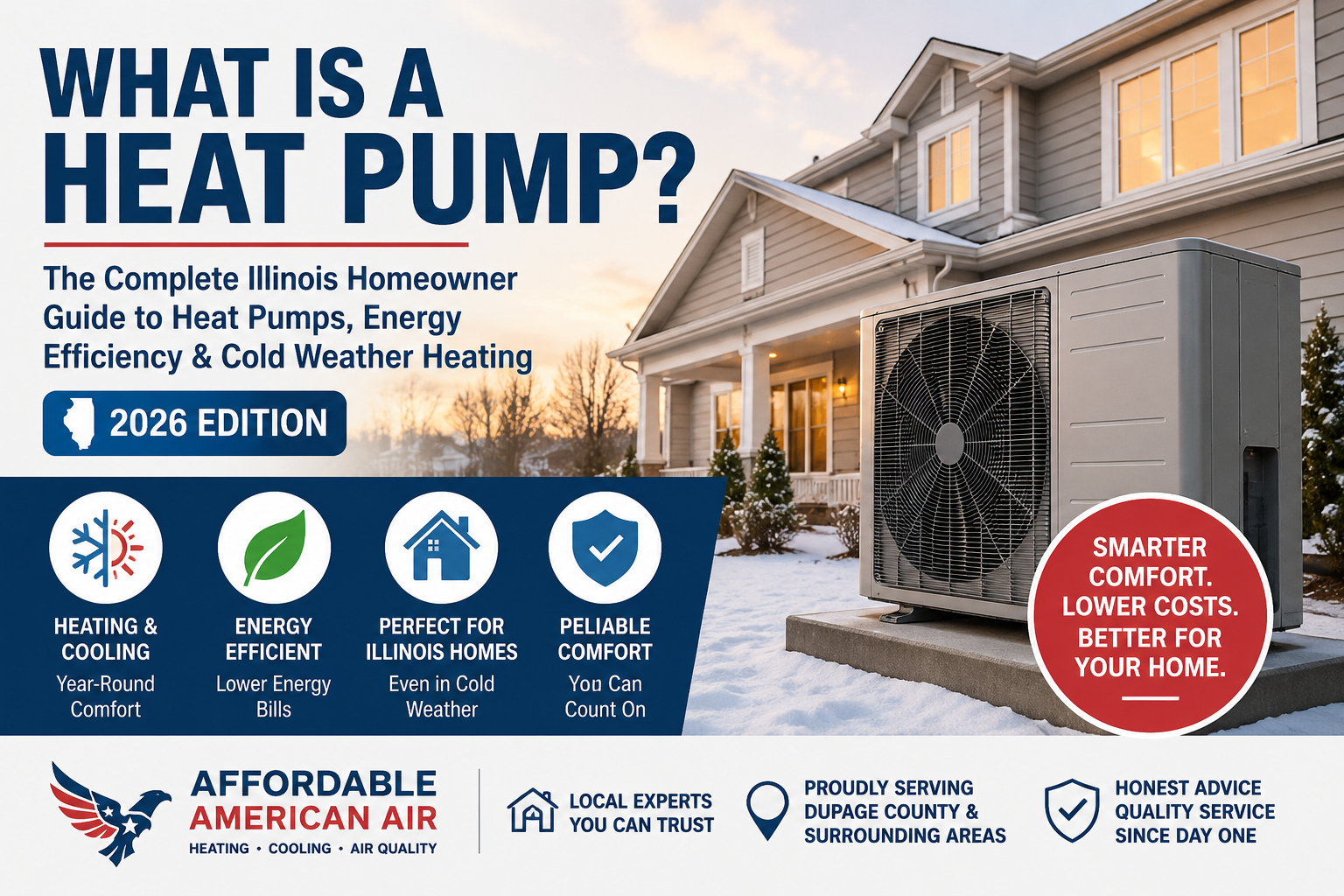
What Is a Heat Pump? The Complete Illinois Homeowner Guide (2026)
https://www.affordableamericanair.net/what-is-a-heat-pump-complete-illinois-homeowner-guide-2026
🔗
Heat Pump vs Furnace: Which Is Better for Illinois Homes?
We also break down:
- Comfort differences
- Energy efficiency
- Winter performance
- Operating costs
- Dual fuel comparisons
In our full comparison guide:
🔗
Heat Pump vs Furnace: Which Is Better for Illinois Homes? (2026 Guide)
❓
Frequently Asked Questions (Illinois Homeowner FAQ)
❓ Is dual fuel better than a furnace?
Not necessarily better for every home—but for many Illinois homeowners, dual fuel offers an excellent balance between:
- Heat pump efficiency
- Furnace reliability during extreme cold
❓ Does a dual fuel system still use gas?
Yes.
The heat pump handles heating during moderate weather, while the gas furnace operates during colder outdoor conditions.
❓ Does dual fuel save money?
In many homes, it can.
Heat pump operation during moderate temperatures may reduce energy usage compared to relying entirely on furnace heat.
Savings depend on:
- Utility rates
- Equipment efficiency
- Outdoor temperatures
- Home insulation
- Installation quality
❓ Can I keep my existing furnace and add a heat pump?
Sometimes.
This depends on:
- Furnace age
- Compatibility
- Efficiency
- Refrigerant requirements
- System design
A professional HVAC evaluation is important.
❓ Does dual fuel work during polar vortex temperatures?
Yes.
That’s actually one of the biggest advantages of dual fuel systems in Illinois.
During extreme cold:
👉 The furnace automatically takes over heating duties.
❓ Is a dual fuel system the same as a mini split?
No.
While many mini splits are heat pumps:
👉 Dual fuel systems are typically:
- Ducted
- Furnace-integrated
- Central HVAC systems
📍
Serving DuPage County & Surrounding Areas
Affordable American Air proudly serves homeowners throughout:
- Naperville
- Lombard
- Wheaton
- Glen Ellyn
- Downers Grove
- Elmhurst
- Surrounding DuPage County communities
📞
Schedule Your FREE Comfort Assessment
Wondering if a dual fuel system is right for your home?
📞 Call
630-HVAC-995
🌐
https://www.affordableamericanair.net
We’ll help you determine the best HVAC solution for:
- Comfort
- Efficiency
- Budget
- Real Illinois winter performance
🔥
Final Thoughts
Dual fuel systems are becoming increasingly popular because they combine:
✅ Modern heat pump efficiency
WITH
✅ Traditional furnace reliability
And for many Illinois homeowners:
👉 That combination makes a LOT of sense.