What Is a Heat Pump?
The Complete Illinois Homeowner Guide to Heat Pumps, Energy Efficiency & Cold Weather Heating (2026 Edition)
If you’ve been researching new heating and cooling systems lately, you’ve probably heard the term:
“Heat pump.”
And if you’re like many homeowners across Naperville, Hinsdale, Lombard, Wheaton, Glen Ellyn, Downers Grove, and surrounding DuPage County areas, you may be wondering:
- What exactly is a heat pump?
- Is it different from my current air conditioner?
- Does it actually work in Illinois winters?
- Is it worth switching to one?
At Affordable American Air, we hear these questions every day—and we’re going to break it all down in simple homeowner-friendly terms.
What Is a Heat Pump?
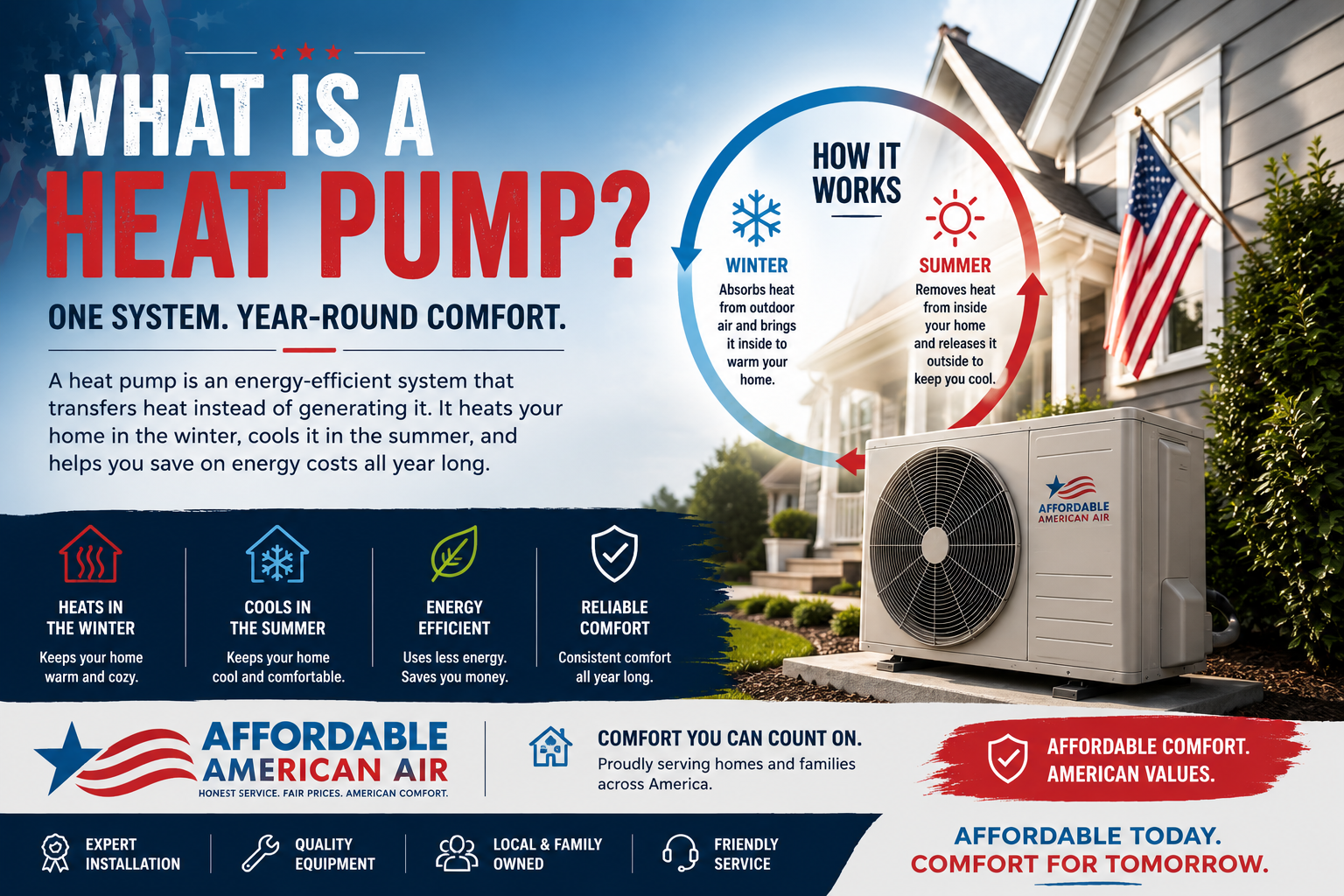
A heat pump is a heating and cooling system that moves heat instead of generating it directly like a traditional furnace.
The important thing many homeowners don’t realize is:
A heat pump ALSO functions as an air conditioner.
During summer:
- It cools your home exactly like a traditional AC system
During winter:
- It reverses operation and brings heat into your home
Is a Heat Pump Completely Different From My Current Air Conditioner?
This is one of the biggest misconceptions homeowners have.
In many cases:
A heat pump is NOT some completely unfamiliar or experimental system.
In fact:
Most ducted heat pumps look and operate VERY similarly to a traditional central air conditioning system.
They still use:
- An outdoor condenser unit
- An indoor evaporator coil
- Refrigerant lines
- Ductwork
- A thermostat
The BIG Difference
A traditional air conditioner:
- ONLY cools
A heat pump:
- Can cool AND heat
It does this by reversing the refrigeration cycle.
What This Means for Homeowners
In many homes:
A heat pump simply replaces the existing outdoor air conditioner while keeping a very familiar overall HVAC setup.
That’s an important distinction.
Many homeowners imagine:
A completely different system
A massive renovation
Complicated new equipment
But in reality:
Many heat pump installations feel very familiar to homeowners already used to central air conditioning.
Many Existing Furnace & AC Systems Can Transition to a Heat Pump Setup
One of the biggest misconceptions homeowners have is thinking a heat pump requires a completely different type of home or HVAC system.
In reality, many homeowners who are already planning to replace an aging furnace and air conditioner may already be excellent candidates for a heat pump system.
In many Illinois homes:
- The existing ductwork can often still be used
- The indoor system may be upgraded or replaced
- The outdoor air conditioner is replaced with a heat pump condenser
While still maintaining a very familiar overall HVAC setup inside the home.
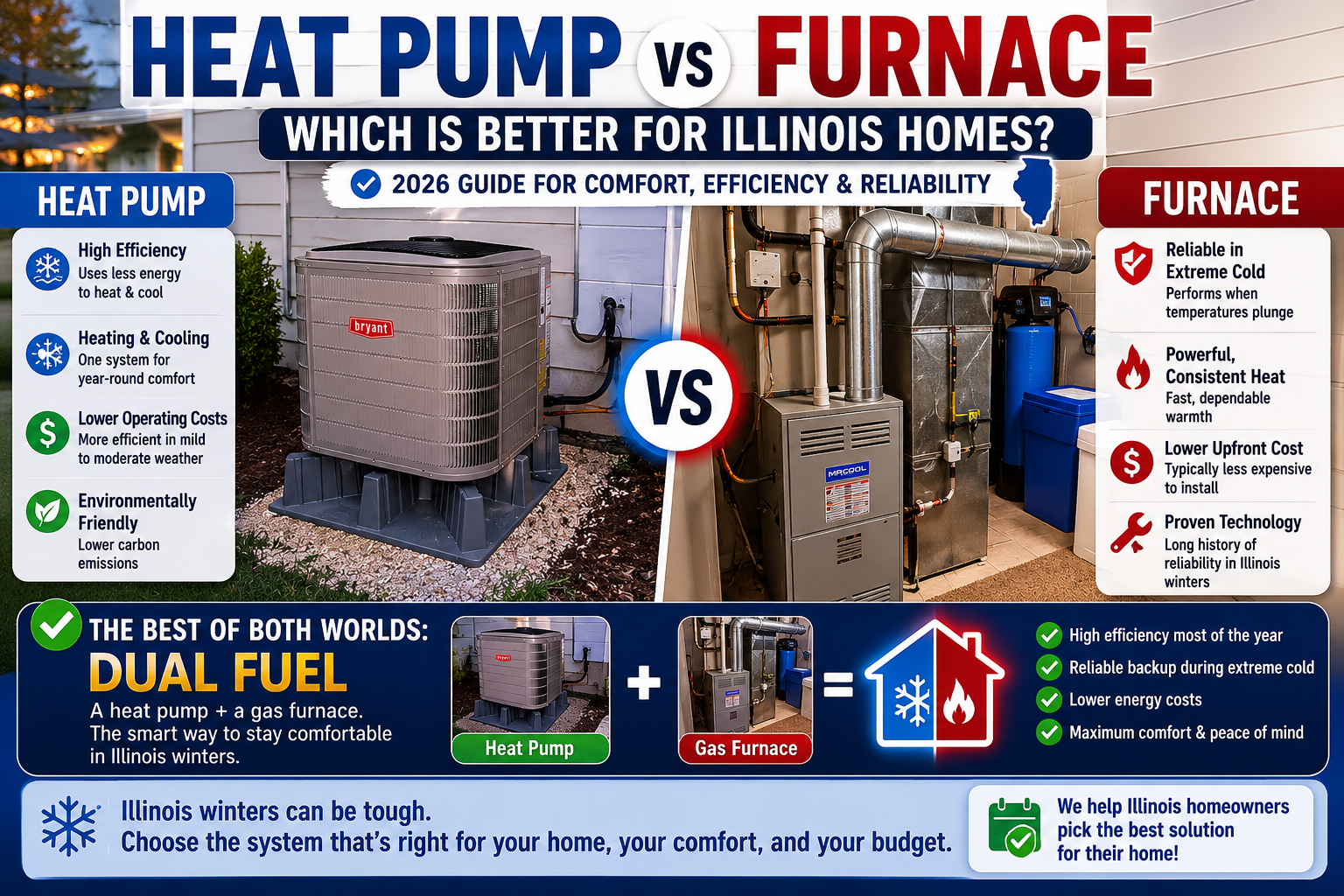
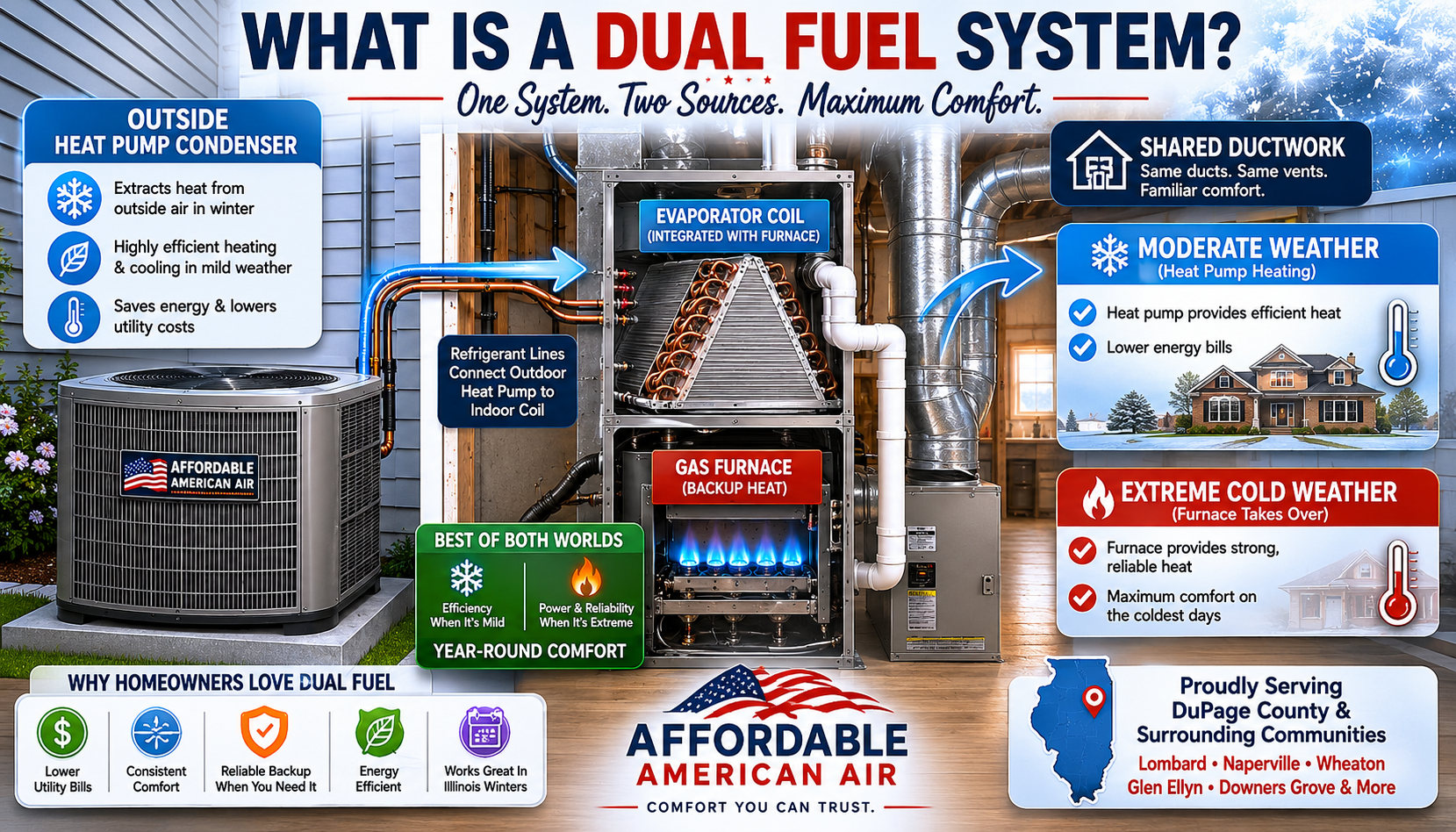
What About Dual Fuel Systems?
A dual fuel system allows homeowners to combine:
- A heat pump
- A gas furnace backup
This setup is extremely popular in Illinois because it combines:
High efficiency during moderate weather
Reliable furnace heat during extreme cold
Familiar furnace airflow and ducted comfort
Lower overall operating costs
For Many Homeowners, It Still Feels Like Traditional Central Heating & Cooling
From the homeowner’s perspective:
- You still have ductwork
- You still have vents
- You still use a thermostat
- You still have central airflow throughout the home
The major difference is:
The system now has the ability to heat more efficiently during much of the year using heat pump technology.
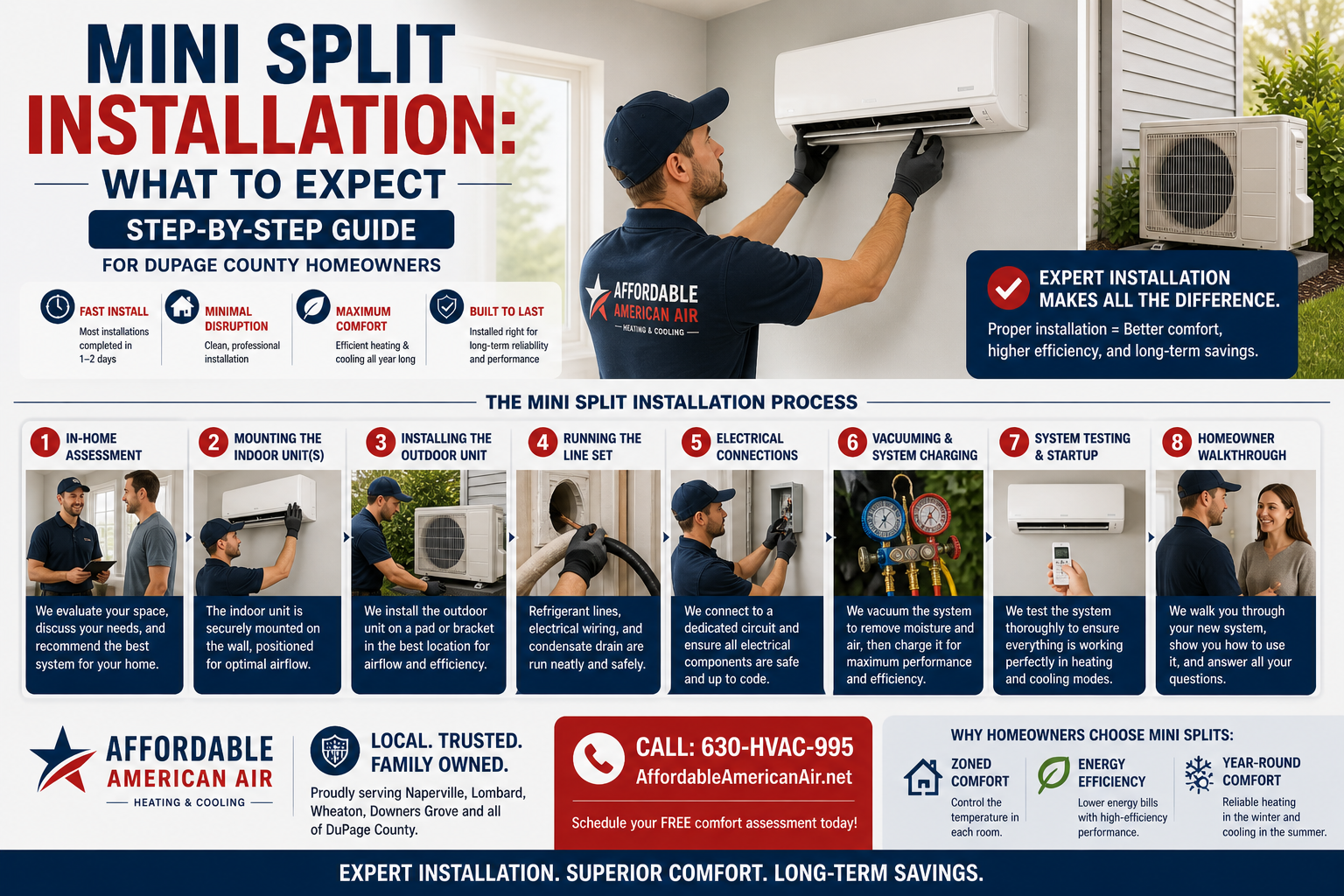
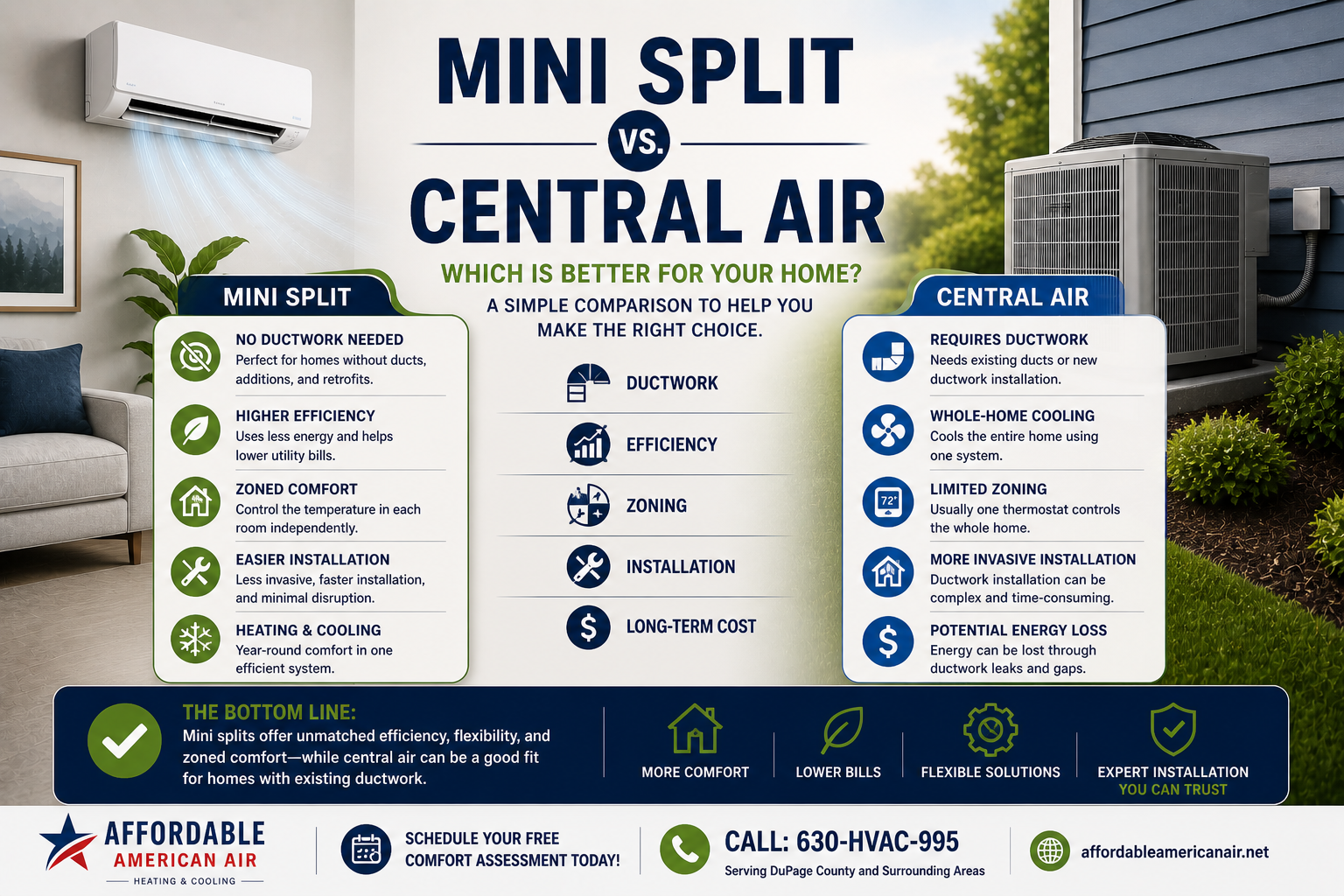
What About Ductless Mini Split Heat Pumps?
Many homeowners are surprised to learn that:
Most mini split systems ARE actually heat pumps.
A ductless mini split heat pump works using the same basic heat transfer principles as a traditional ducted heat pump system.
The major difference is:
Instead of using traditional ductwork, mini splits use individual indoor air handlers mounted in specific areas of the home.
What Makes Mini Split Heat Pumps Different?
Traditional ducted heat pumps:
- Use existing ductwork
- Push air through vents throughout the home
Ductless mini split heat pumps:
- Deliver heating and cooling directly into individual rooms or zones
- Do not require traditional duct systems
Mini Split Heat Pumps Are Extremely Popular For:
Additions
Basements
Garages
Home offices
Older homes without ductwork
Hot & cold spot problems
Supplemental heating and cooling
The Important Thing Homeowners Should Understand
Whether the system is:
- Ducted
OR - Ductless
Both systems can still use heat pump technology.
That means:
- Heating
- Cooling
- High efficiency
- Inverter-driven operation
- Energy savings
Can all apply to BOTH styles of systems.
How Does a Heat Pump Work?
Heat pumps work by transferring heat using refrigerant.
In Cooling Mode:
The system removes heat from inside your home and transfers it outdoors.
This works very similarly to a traditional air conditioner.
In Heating Mode:
The process reverses.
The heat pump:
- Pulls heat from outdoor air
- Transfers it into your home
Even cold outdoor air still contains usable heat energy.
Modern heat pumps are designed to extract and transfer that energy very efficiently.
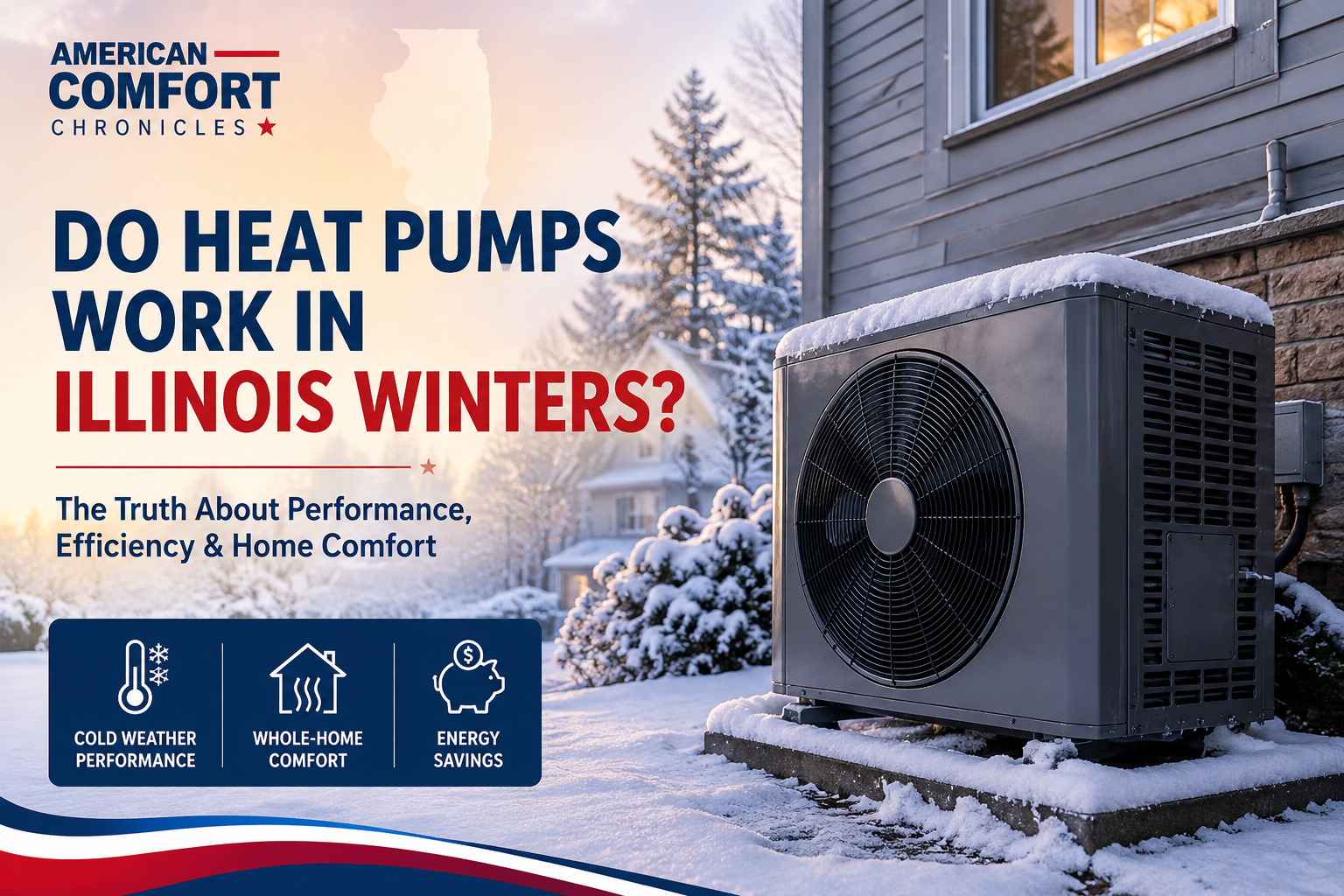
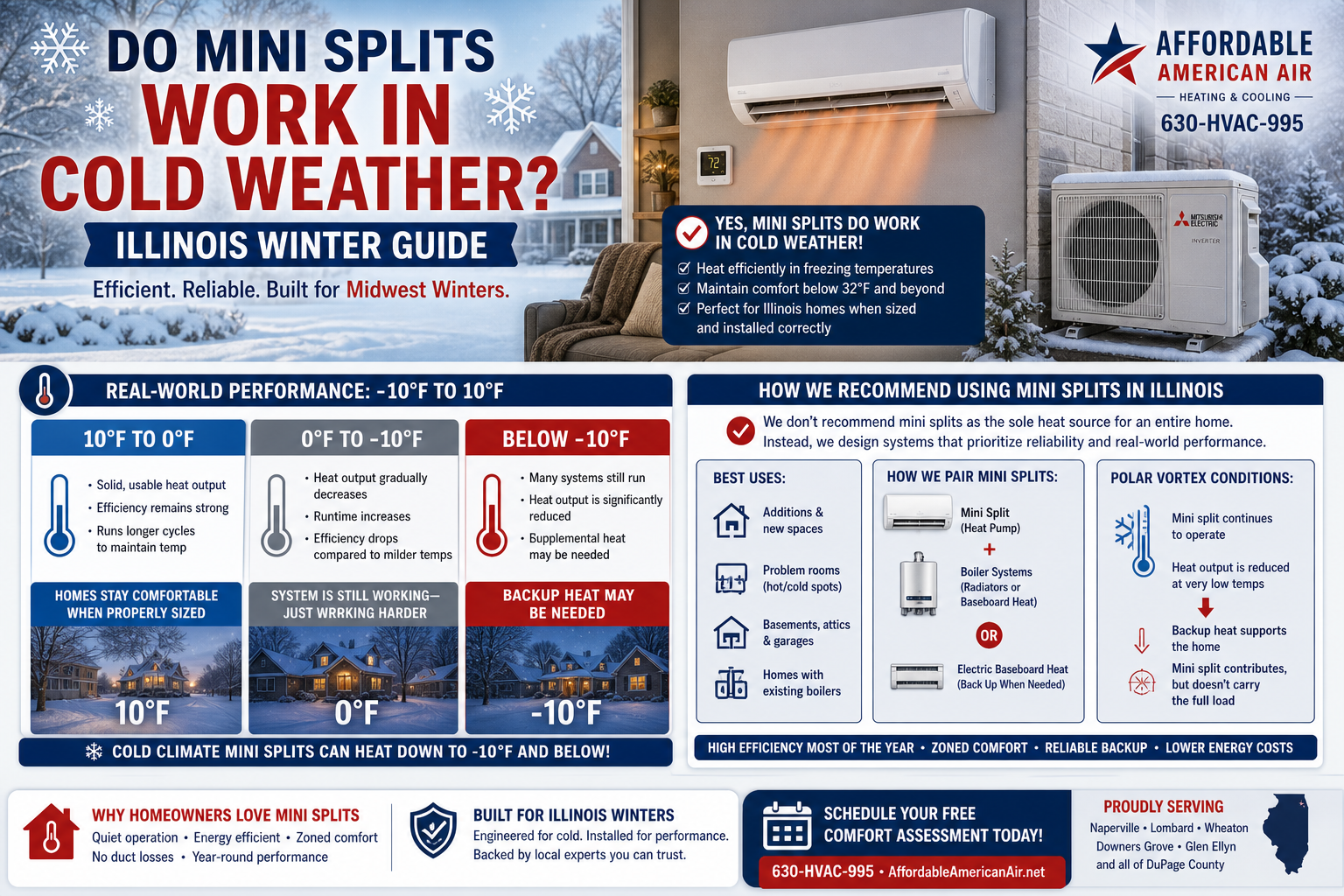
Do Heat Pumps Work in Illinois Winters?
This is one of the MOST important questions homeowners ask—and the answer is:
Yes… but proper system design matters.
Modern cold-climate heat pumps can:
- Operate below freezing
- Continue heating at 10°F
- Still function around 0°F and below
However:
Illinois winters can become EXTREME.
Real-World Illinois Performance
Between 30°F and 10°F:
Heat pumps perform VERY efficiently.
Between 10°F and 0°F:
They still provide strong heating, but:
- Runtime increases
- Efficiency gradually drops
Between 0°F and -10°F:
The system still operates, but:
- Heat output decreases
- Supplemental heat may become necessary
This Is Why System Design Matters
At Affordable American Air, we take a practical Illinois approach.
We don’t blindly recommend heat pumps as a one-size-fits-all solution.
Instead:
We design systems around:
- The home
- Existing equipment
- Comfort goals
- Real Midwest winter conditions
What Is Inverter Technology?
Modern heat pumps often use:
Inverter Technology
This allows the system to:
- Adjust speed automatically
- Run more efficiently
- Maintain steadier temperatures
Instead of constantly turning ON and OFF:
The system modulates output based on demand.
Benefits of Inverter Systems
Better comfort
Lower energy usage
Quieter operation
Reduced wear and tear
Longer equipment lifespan
Types of Heat Pumps
Ducted Heat Pumps
Traditional central-style systems connected to ductwork.
Ductless Mini Split Heat Pumps
Wall-mounted indoor units without ductwork.
Multi-Zone Heat Pumps
One outdoor unit serving multiple indoor areas independently.
Dual Fuel Heat Pumps
Heat pump combined with furnace backup.
What About Geothermal Heat Pumps?
Another type of heat pump system is a:
Geothermal Heat Pump System
Unlike traditional air-source heat pumps, geothermal systems transfer heat using underground earth temperatures instead of outdoor air.
Because underground temperatures remain relatively stable year-round:
Geothermal systems can be extremely efficient for both heating and cooling.
Benefits of Geothermal Systems
Potential advantages include:
Extremely high efficiency
Lower long-term operating costs
Quiet operation
Reduced outdoor weather impact
Long equipment lifespan
Are Geothermal Systems Common in Illinois?
Geothermal systems are less common than traditional air-source heat pumps because they typically require:
- Underground loop installation
- More involved installation planning
- Higher upfront investment
However:
Interest in geothermal technology continues to grow as homeowners look for long-term energy efficiency solutions.
The Future of High-Efficiency HVAC
At Affordable American Air, we continue exploring advanced heat pump technologies—including geothermal systems—as energy-efficient HVAC solutions continue evolving throughout Illinois.
Through industry partnerships, distributor relationships, and trade education resources, we remain committed to staying at the forefront of modern HVAC technology.
Do Heat Pumps Save Money?
In many homes:
Yes.
Heat pumps are extremely efficient because:
They move heat rather than create it through combustion.
This often results in:
- Lower energy consumption
- Reduced utility bills
- Improved overall efficiency